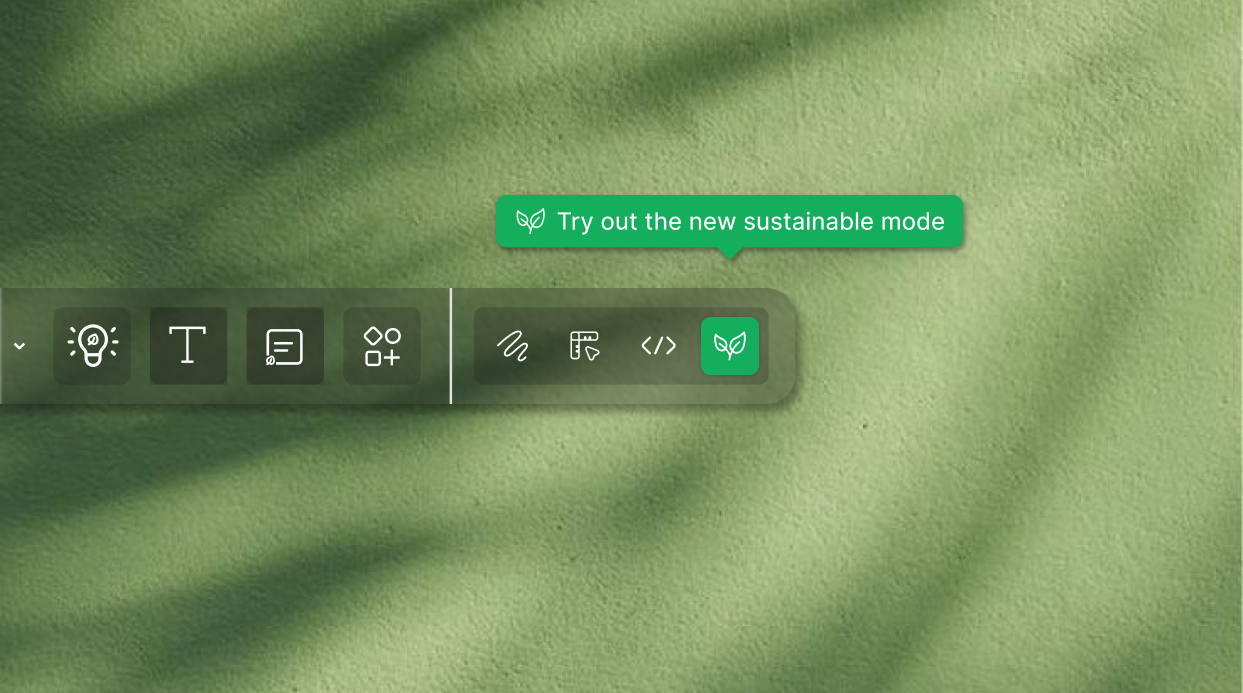
This graduation project explored how sustainability could be embedded directly into design software. Through user research, co-creation workshops, and iterative prototyping, we designed and validated a concept that provides contextual sustainability feedback within designers' existing workflow.
| Team | 2 Product designers |
| Role | UX Research & Product Design. Led user testing and synthesized findings into actionable insights. Collaborated on concept development and low-fidelity prototyping. Contributed to refining the product through iterative design. |
| Duration | 6 weeks |
Designers influence many decisions that affect energy consumption and carbon emissions, yet sustainability is rarely considered as part of the design process. As a result, designers often lack the awareness and support needed to understand the environmental impact of their decisions.
Through interviews with senior designers, supported by desk research, we explored how sustainability is considered within existing design workflows.
Rather than creating another standalone sustainability tool, the concept focused on embedding sustainability directly into the design workflow. Sustainability Mode was designed for Figma, providing contextual feedback at the moment design decisions are made.
A co-creation workshop with five designers revealed three capabilities needed to support sustainable decision-making: measure impact, guide better choices, and explain why those choices matter. These insights, together with participants' sketches, formed the foundation of the concept.
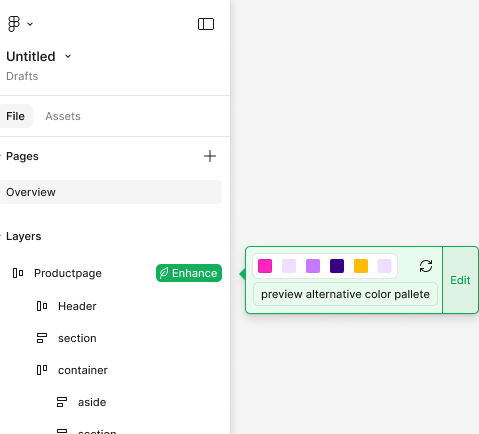
To Guide
Data translated into alternatives, right at the moment a decision is made.
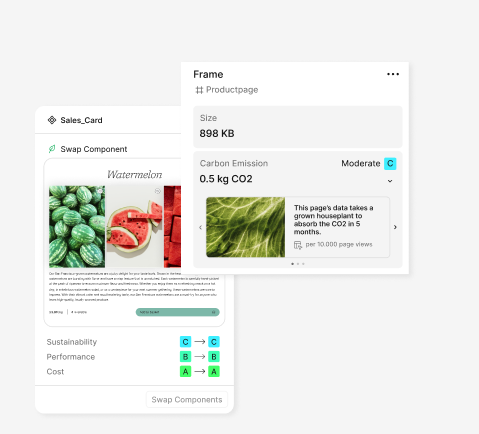
To Measure
Concrete metrics tied to specific elements, giving designers a factual basis to act on.
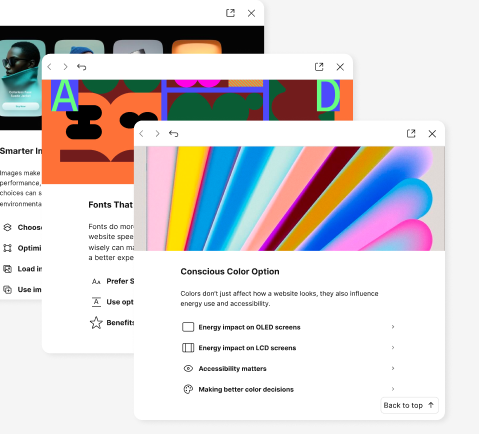
To Educate
The reasoning behind a recommendation, not just the recommendation itself.
The concept was evaluated through task-based usability tests with five designers. The sessions explored how participants understood the features, whether they integrated naturally into existing workflows, and what motivated or hindered adoption. Findings were synthesised using affinity mapping to identify recurring themes and guide further design decisions.
The key insights per capability are shown below.
Integrated Sustainable Capabilities in Design Software
Guidance matters because designers often lack awareness of the environmental impact of their design choices. However they shouldn't lose control over their work. The most effective guidance reveals the consequences of decisions and highlights possible options available, instead of telling designers what to do.
Guidance is meant to be used early in the design phase, as using the tool as a final assessment can later feel disruptive.
Measurement is essential because it provides the factual foundation for both guidance and education. Designers value metrics that help them validate their design decisions and support workflow priorities like performance and efficiency. However research shows that familiar rating conventions (A-F scales) create only surface-level comprehension without deeper understanding. Metrics must be accompanied by explanation and context that transforms data into actionable knowledge.
Designers recognize when metrics indicate improvement.
But cannot evaluate significance, contextualize impact, or determine appropriate responses.
Education is essential because it creates the foundation for eventual behavior change and informed decision-making. Designers cannot make sustainable choices without understanding what those choices mean.
The research reveals that sustainability awareness among designers is extremely low.
Yet designers explicitly describe the sustainability capability as valuable for learning.
Designers show genuine curiosity about environmental impact, even when they are not yet ready to change their work practices.
Designing this concept meant more than creating a new feature. It required understanding Figma's existing product ecosystem and ensuring every interaction felt familiar and intuitive. Working within established design patterns and users' mental models reinforced that meaningful innovation often comes from integrating new ideas into existing systems, rather than redesigning them from scratch.
The research also revealed that one product alone cannot solve a systemic challenge. Designers constantly switch between different tools throughout their workflow, making it unrealistic for sustainability to depend on a single platform.